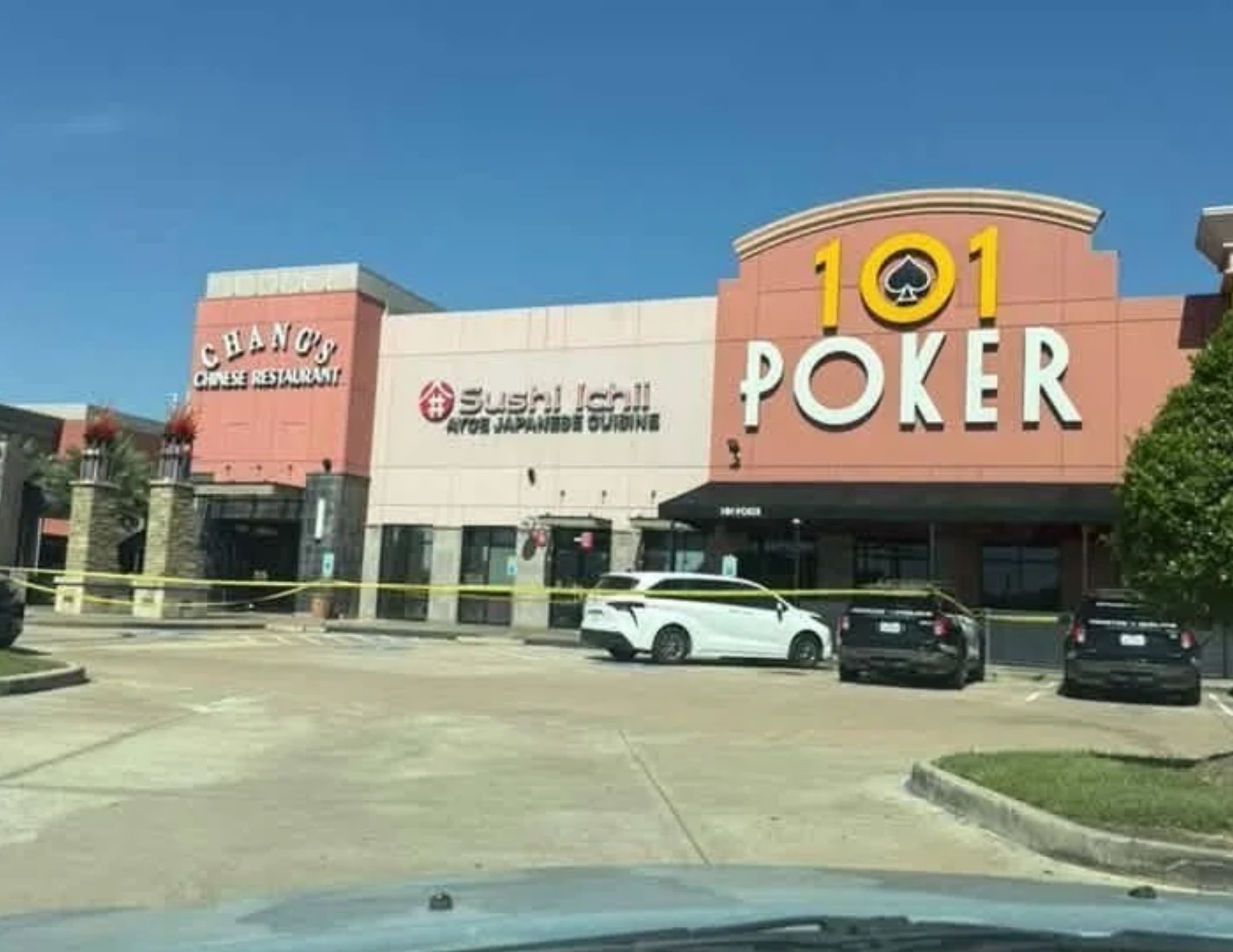
Yellow tape stretched across the parking lot outside 101 Poker Club on Thursday, stopping the action at one of the Houston area's established card rooms.
Houston police raided the Katy club at about 11:30 a.m. on October 22, according to reporting by Jon Sofen of PokerNews. Players were allowed to leave. Dealers and other employees were detained, and at least one employee who was not a dealer was arrested, the outlet reported.
Update, Oct. 24: HPD said on X on Oct. 24 that its Vice Division and the Harris County District Attorney's Office seized more than $118,000 at an illegal gambling operation in the 20900 block of Katy Freeway. Four people were charged with engaging in organized criminal activity, and a charge is pending against a fifth. HPD did not name the business in its post. Charges are accusations, not convictions.
The Sham Report is not publishing the names of those charged.
PokerNews said it had requested comment from HPD. The reporting reviewed for this story does not establish the grounds for the warrant. A raid and an arrest are not findings of guilt.
What players are saying
People who had played at 101 told PokerNews that the club collected a membership fee but also took chips from cash-game pots. Sources also described inconsistent membership checks and officers entering with guns drawn.
Those accounts have not been independently confirmed by The Sham Report. They should not be treated as the police explanation for the raid.
Why the fee model matters
For players, the difference is easy to recognize. A time charge pays for a seat by the hour. Rake comes out of the pot. The legal questions behind those arrangements are more complicated.
Texas Penal Code Section 47.02(b) provides a defense to a gambling prosecution when play occurs in a private place, nobody receives an economic benefit beyond personal winnings, and participants face the same risks and chances apart from skill or luck.
That is not a blanket license for a commercial poker room. The Texas State Law Library describes the legality of private clubs as disputed. Operators argue that membership fees, rather than a share of the pot, put their businesses within the law. Whether a particular room qualifies depends on its operations and the applicable law.
A membership card alone does not settle the issue. Neither does calling a charge a seat fee. The records in this case will matter more than the labels.
Another raid, a different case
Texas players have already watched two other prominent rooms face enforcement actions this year.
In May, Houston police searched Lucky J Social Club on Richmond Avenue. ABC13 reported that officers seized more than $350,000 and arrested three men on misdemeanor gambling-promotion charges. That was a separate location and investigation.
The Lodge Card Club in Round Rock was raided in March. A Williamson County grand jury declined to indict in April, PokerNews reported, clearing a path for the club to reopen.
Neither case tells us how the 101 investigation will end. Different operators, evidence and allegations can produce very different outcomes.
What comes next
For now, the missing pieces are the warrant and an explanation from investigators or the club. Those would help establish what authorities were looking for and whether the allegations about rake played a part.
Players planning to visit 101 should confirm its operating status directly before making the trip. Thursday's closure does not, on its own, tell us when the room might reopen.
The tape is visible. The legal case is not yet clear. Until the records fill in that gap, there is no reason to turn a reported allegation into a verdict.